For foreign brand owners operating in or selling products to China, one of the most significant—and often misunderstood—challenges is the deliberate registration of copycat trademarks by local entities. When a domestic company registers marks that closely imitate your brand, applies for them across various classes, and builds a parallel business leveraging the goodwill you have established, the repercussions extend well beyond a single trademark dispute. Such actions can block your market access, confuse consumers, and dilute the reputation you have invested years and substantial resources to build.
Historically, many foreign rights holders believed the Chinese trademark system was skewed against them—that squatters could register marks without consequence, enforcement was slow and unreliable, and the only viable option was to repurchase their own brand at inflated prices. However, this outlook is no longer accurate. The Chinese trademark system, particularly the courts, have become increasingly proactive in invalidating registrations made in bad faith and in safeguarding the rights of genuine brand owners.
A recent series of rulings by the Beijing High People’s Court in the Shuang Fei Ren (双飞人) case provides a clear example of how Chinese courts currently address bad-faith trademark registrations and what foreign brand owners can realistically expect. This case is instructive because it highlights both the remedies available and the legal reasoning applied when determining whether a registration constitutes an abuse of the system.
The Shuang Fei Ren Case: Dismantling a Systematic Copycat Scheme
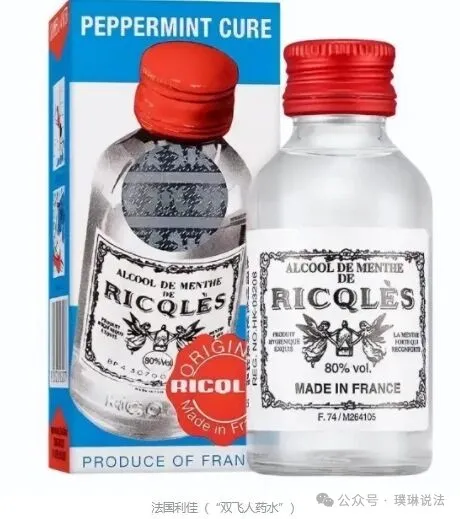
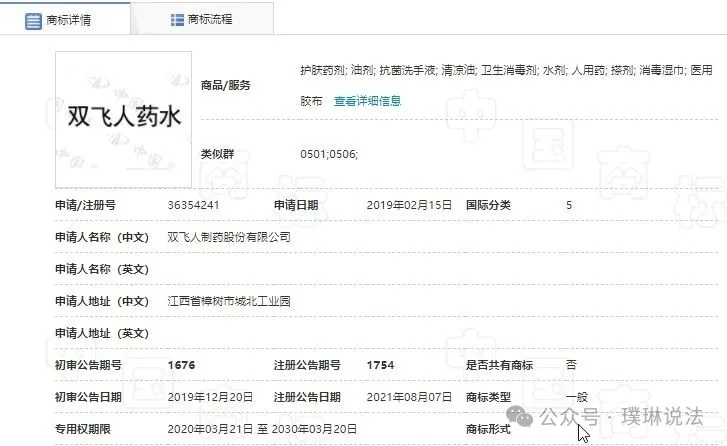
This dispute centers on the French pharmaceutical brand Laboratoires Ricqles (法国利佳制药厂), whose “Shuang Fei Ren Yao Shui” (双飞人药水) medicinal water has been marketed in South China since the 1990s, supported by newspaper advertising and distinctive blue, white, and red packaging that is widely recognized by consumers. Against this backdrop, a Chinese company, Shuang Fei Ren Pharmaceutical Co., Ltd. (双飞人制药股份有限公司), applied for and secured registration of seven trademarks related to “Shuang Fei Ren,” including marks such as “Shuang Fei Ren Yao Shui” (Class 5 disinfectants and cooling oils) and others spanning Classes 5 and 32 (pharmaceuticals and beverages).
Starting in July 2019, Rigge Trading Co., Ltd. (里格贸易有限公司), representing the French brand owner, filed invalidation requests against all seven marks. The China National Intellectual Property Administration (CNIPA) ruled in September and October 2022 that these registrations were obtained through “other improper means” under Article 44(1) of the Trademark Law and invalidated all seven marks. Following appeals through administrative litigation, the Beijing High People’s Court upheld these invalidations in a series of judgments, including Judgment No. (2024) Jing Xing Zhong No. 2950 dated October 30, 2025.
Court’s Analytical Framework: Key Reasoning
The Beijing High People’s Court’s detailed reasoning in this judgment offers valuable insight into the current judicial approach to bad-faith registrations:
- Recognition of Prior Use and Acquired Reputation
Laboratoires Ricqles had advertised “Shuang Fei Ren Yao Shui” extensively in mainland Chinese newspapers since the 1990s, achieving broad circulation and significant consumer recognition in South China. The Supreme People’s Court had previously acknowledged in a 2021 civil judgment that the brand had acquired notable influence and that consumers associated the “Shuang Fei Ren Yao Shui” name with the twin-angels device mark. The court found that despite differences in mark composition, this reputation and cognitive association created a likelihood of confusion, violating Article 31 of the 2013 Trademark Law, which protects prior-use marks with established influence. - Finding of Systematic Bad Faith under Article 44(1)
The court examined the applicant’s filing behavior across multiple classes and marks. Shuang Fei Ren Pharmaceutical and its affiliates had registered a series of “Shuang Fei Ren” marks, imitated the French product’s distinctive blue-white-red trade dress, and filed for imitations of other well-known marks such as “Gauloise Rooster” (高卢鸡), “White Arrow” (白箭), and “Louis Royal Family” (路易斯皇族) without justification. This pattern demonstrated a clear intent to exploit the goodwill of established brands, constituting “other improper means” under Article 44(1). - Rejection of the “Extensive Use” Defense
The defendant argued that its long-term use had generated legitimate goodwill deserving protection. The court firmly rejected this, noting that the reputation was partly built on consumer confusion and that protecting such reputation would reward wrongful conduct. The court emphasized that reputation founded on confusion is not protected goodwill under the law. - Alignment with Emerging Examination Guidelines
The court’s reasoning aligns with the draft Trademark Examination and Adjudication Guidelines published by CNIPA in September 2026, which identify various patterns of bad-faith filings—such as multiple registrations similar to marks with reputation, repeated filings for the same famous mark, and filings resembling trade names or celebrity names—as “other improper means.”
Implications for Foreign Brand Owners
The Shuang Fei Ren case underscores that, despite challenges in a first-to-file system, the Chinese legal framework offers robust remedies for foreign brand owners who pursue coordinated enforcement strategies. Key takeaways include:
- Whole-Portfolio Invalidation Is Possible: Courts can invalidate an entire portfolio of copycat marks across different classes when systematic bad faith is demonstrated, significantly enhancing enforcement efficiency.
- “Extensive Use” Will Not Shield Bad-Faith Registrants: Courts will scrutinize how reputation was established and will not protect goodwill built on consumer confusion.
- Prior Use and Reputation Are Critical: Comprehensive evidence of long-term advertising, sales, and consumer recognition in China is essential to support invalidation claims.
- Trade Dress Imitation Strengthens Cases: Copying distinctive packaging or trade dress can serve as compelling evidence of bad faith and support unfair competition claims.
- Article 44(1) Provides a Powerful, Time-Unlimited Remedy: This catch-all provision allows invalidation of registrations obtained through improper means without being subject to the usual five-year limitation period.
Strategic Recommendations for Brand Owners
To effectively protect your brand in China, consider the following:
- Continuous Evidence Preservation: Maintain ongoing documentation of your brand’s use, advertising, sales, and consumer recognition in China.
- Proactive Filing Strategy: Secure defensive registrations across relevant classes and scripts early to prevent squatters from filing first.
- Vigilant Monitoring and Early Opposition: Use trademark watch services and act promptly during opposition windows to challenge suspicious filings.
- Coordinated Enforcement: Understand and utilize the full procedural path—from CNIPA invalidation to administrative litigation and appeals—to maximize enforcement success.
- Leverage Trade Dress and Unfair Competition Claims: Document and pursue claims related to packaging imitation alongside trademark actions.
- Utilize Article 44(1) Strategically: Employ this provision to challenge bad-faith registrations regardless of their age.
A Positive Outlook: The Trend Toward Good Faith Enforcement
The Shuang Fei Ren decisions reflect a broader shift in China toward stricter enforcement against bad-faith trademark registrations. CNIPA and the courts are increasingly aligned in applying good-faith principles, as codified in recent draft guidelines and judicial interpretations. Foreign brand owners who invest in preparation, evidence gathering, and strategic enforcement will find the Chinese system more responsive and effective.
How We Can Support You
As a bilingual Chinese attorney specializing in trademark prosecution, enforcement, and litigation for foreign clients, I assist brand owners in navigating the complexities of the Chinese trademark system. Our services include proactive portfolio management, opposition and invalidation proceedings, coordinated enforcement actions, evidence preservation, and representation before CNIPA and the courts.
Every brand’s situation is unique. Whether your brand has been copied in China or you are preparing to enter the market, we welcome the opportunity to discuss your circumstances, evaluate your portfolio, and develop a tailored strategy to protect your brand effectively.
Please feel free to contact me for an initial consultation. In trademark matters, timing and evidence are crucial—the sooner you act, the stronger your position.
Andrea (Liang Wen)
Attorney at Law
Tel/WhatsApp/WeChat: +86 139 1010 4946
Email: wen.liang@hengdulaw.com