If you are an executive, general counsel, or intellectual property director for an international brand, you likely have a clear and reassuring understanding of how trademark law operates. Over the years, you’ve built a portfolio of iconic designs, distinctive patterns, and instantly recognizable logos. You’ve successfully navigated trademark disputes in the United States, the European Union, and perhaps Japan. You understand the rules in these regions—such as how certain common patterns, like checkerboards or four-petal flowers, are often regarded as part of the public domain and cannot be exclusively owned by any one company. While you may have occasionally been frustrated by competitors using similar designs, you’ve generally respected the legal boundaries between your brand and general design style.
Then, you turn your attention to China.
Here, the rules don’t just change—they are completely upended, creating a complex and often surprising legal environment. Welcome to the intriguing and challenging world of Chinese trademark law, where a luxury conglomerate might face repeated setbacks in Western courts over a checkerboard pattern, yet secure a substantial multimillion-yuan victory against an unrelated milk tea company for using a four-leaf flower in China.
If your company holds intellectual property assets in China or plans to enter the Chinese market, understanding this paradox is essential. What follows is not a dry legal lecture but a practical, insightful, and sometimes candid guide to why China approaches trademarks differently—and why relying solely on your Western legal framework could lead to costly missteps. More importantly, it highlights when it’s crucial to engage local legal expertise to navigate these complexities effectively.
Let’s begin with a prime example: Louis Vuitton, often regarded as the global heavyweight in intellectual property litigation. For years, LV has been at the forefront of testing trademark boundaries worldwide. Their experiences offer invaluable lessons—and cautionary insights—for any foreign brand seeking to bridge the gap between Western and Chinese legal systems.
The Global Massacre: When Public Domain Pushes Back
To truly grasp the unique situation in China, we first need to understand the challenging reality Louis Vuitton (LV) encountered in Western markets. Imagine investing millions of dollars to develop iconic designs like the Damier checkerboard pattern or the Monogram floral motif. You register these designs, actively monitor their use, and send cease-and-desist letters with relentless dedication. When a competitor infringes, you take legal action, expecting courts to side with you and award damages.
However, in the United States, LV discovered that judges are notably skeptical about claims to exclusive rights over basic geometric patterns. In a landmark case against Dooney & Bourke, LV sued over a colorful, multi-letter checkerboard design, alleging trademark infringement, dilution, and unfair competition. The federal courts dismissed these claims, reasoning that such a colorful checkerboard combined with letters is a generic decorative element rather than an LV creation. Moreover, since the two brands operated in very different price ranges, the court found no likelihood of consumer confusion. This established a key legal principle: a brand cannot claim exclusive rights over a design style.
LV continued its efforts, targeting H&M for using a two-tone checkerboard print on clothing. Once again, US courts rejected the claim, emphasizing that checkerboard patterns are universal fabric prints used for decoration without intent to exploit LV’s luxury reputation. Even when LV pursued a company producing parody tote bags, the courts ruled that such use was protected under fair use and legitimate parody. The clear message from the American legal system was that brand protection should focus on names and distinctive logos, while common patterns like squares and flowers remain part of the public domain.
The most significant setbacks, however, occurred in Europe. In a decision that likely stunned many in Paris, the European Union Intellectual Property Office and the EU General Court invalidated LV’s Damier checkerboard trademarks. The courts recognized that the two-tone checkerboard pattern has historical roots dating back to ancient Egypt and medieval Europe, classifying it as a basic public geometric design without inherent distinctiveness. Since consumers across the 27 EU member states perceive it as a common decorative motif, LV could not claim exclusive intellectual property rights. Consequently, the trademark was removed from the EU register entirely.
Similar rulings followed in Italy and Japan. Italian courts dismissed LV’s lawsuits against local bag makers, highlighting that checkerboard patterns are a traditional design element in the leather industry. In Japan, LV sued a century-old Kyoto shop selling traditional Buddhist prayer bead bags featuring a black-and-white checkerboard fabric. The Japan Patent Office decisively ruled that the pattern, known as Ichimatsu moyo, is a traditional Japanese folk design dating back to the Edo period, long before LV’s founding in 1896. The Japanese public viewed LV’s claim as an attempt to monopolize their cultural heritage, leading to widespread criticism.
Across Western jurisdictions, a consistent four-pronged legal framework has emerged:
- First, courts distinguish clearly between decorative patterns and brand-identifying trademarks, recognizing that basic geometric shapes lack inherent distinctiveness.
- Second, the public domain serves as an absolute defense, preventing private monopolization of historical and traditional designs.
- Third, the standard for proving consumer confusion is exceptionally high, especially when luxury brands sue mass-market retailers.
- Fourth, protection of famous marks across different product classes is limited to avoid trademark overreach.
For Western legal counsel, this framework represents a balanced and rational approach to intellectual property. But then, the landscape changes dramatically once you cross the Yellow Sea.
The Chinese Anomaly: The Milk Tea Dispute and the Million-Dollar Floral Trademark
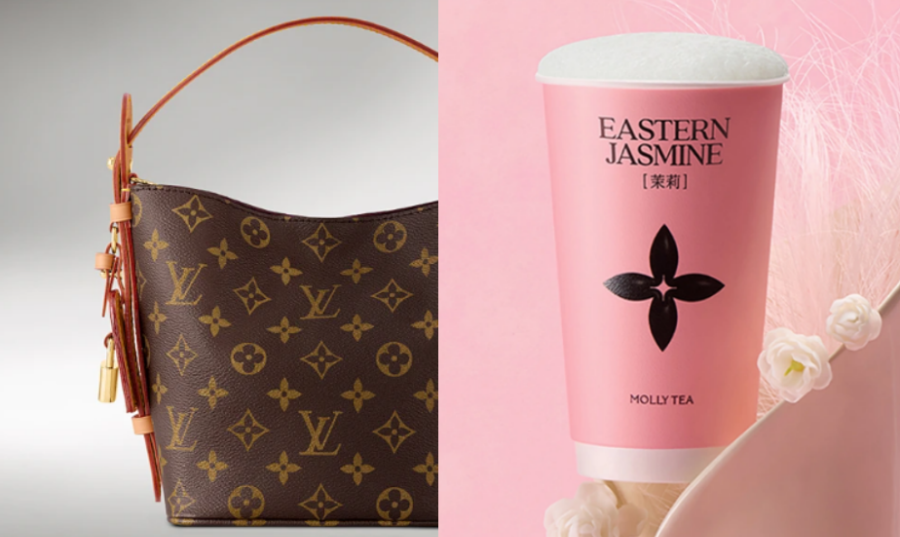
Let’s consider the situation in mainland China. Despite facing challenges in Western markets, Louis Vuitton (LV) remains resilient and has turned its attention to protecting its rights domestically. This time, the focus isn’t on counterfeit handbag manufacturers hidden away in obscure locations, but rather on Jasmine Milk White, a rapidly growing and trendy milk tea and beverage brand based in Shenzhen.
https://news.cnr.cn/dj/20260711/t20260711_527704369.shtml
https://www.spp.gov.cn/spp/zdgz/202607/t20260708_731506.shtml
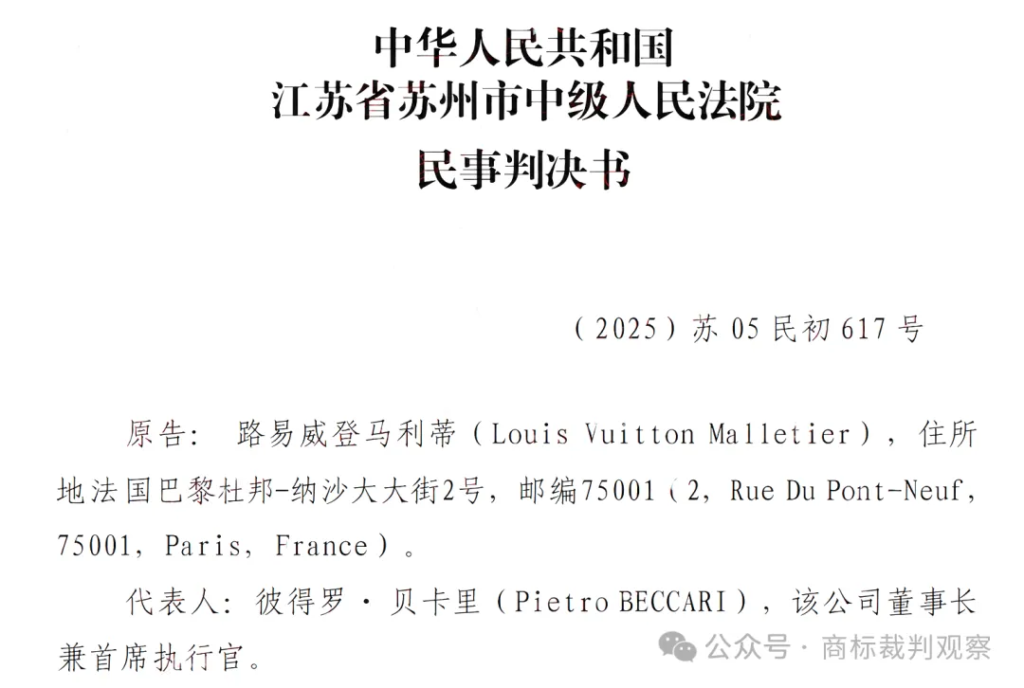
From a Western legal perspective, this lawsuit might seem puzzling. On one side, there’s a French luxury house known for leather goods and high fashion; on the other, a company selling fruit-infused milk tea to young consumers in shopping malls. They operate in entirely different industries and cater to distinct customer bases. One sells beverages, the other handbags. It would seem the case should be dismissed, right?
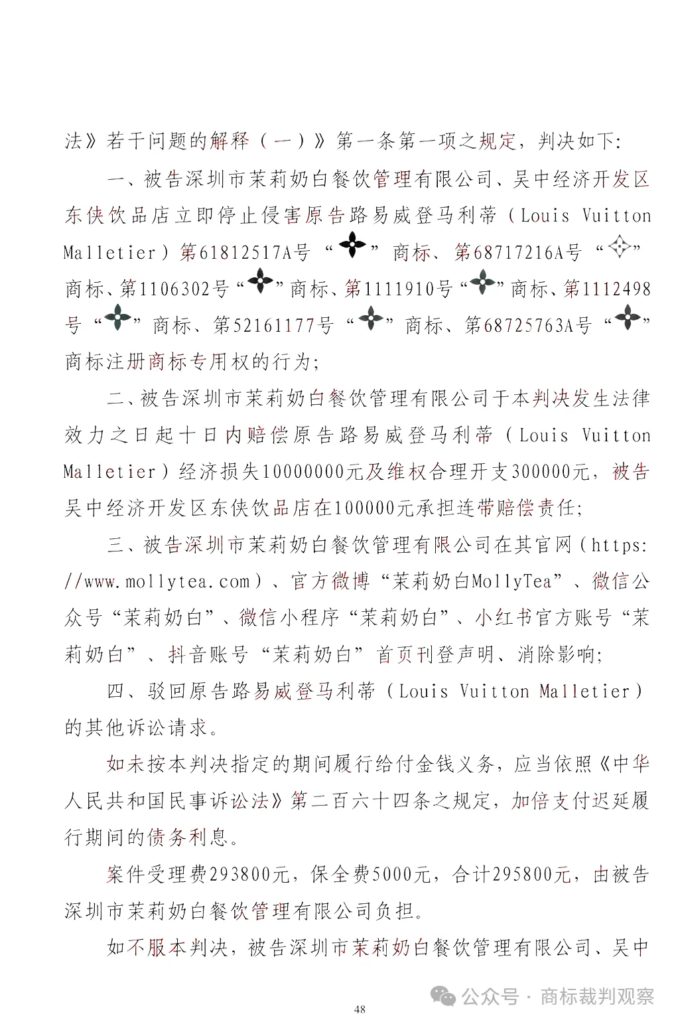
Not so. In a ruling that surprised many in the international business community, the Suzhou Intermediate People’s Court sided with LV, ordering Jasmine Milk White to pay approximately 10.3 million RMB (about 1.4 million USD) in damages and enforcement costs.
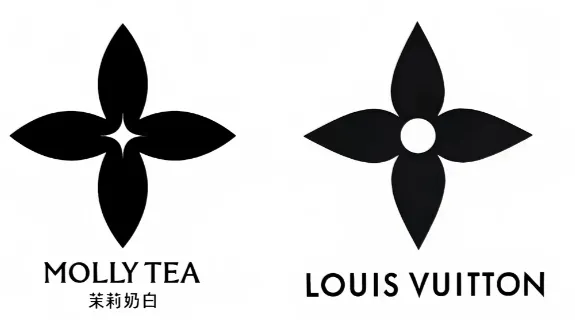
Why? Because Jasmine Milk White had been using a four-petal floral design on their cups, storefronts, packaging, and promotional materials. LV argued this infringed upon seven of their registered graphic trademarks. A Western lawyer might ask: how can a simple four-petal flower—a common natural motif found in any garden—be protected under trademark law? Isn’t nature part of the public domain?
In China, the legal framework operates differently. Chinese intellectual property law doesn’t protect the natural flower itself but safeguards the commercial reputation and brand value built through long-term, specific use of that flower as a brand identifier. China follows a registration acquisition system: if a design, even one inspired by nature, passes the China National Intellectual Property Administration’s (CNIPA) examination and is registered, it gains exclusive trademark rights.
The key concept here is distinctiveness. In Western law, generic patterns lack inherent distinctiveness and cannot be fully protected regardless of marketing efforts. In contrast, China vigorously applies the doctrine of acquired distinctiveness. The courts recognized that although the four-petal flower is a public domain element, LV had used it continuously, exclusively, and extensively for decades on leather goods, luggage, and apparel. This consistent commercial use created a strong, unmistakable association in the minds of Chinese consumers. When they saw that floral pattern, they didn’t just see a flower—they thought of LV. Thus, the trademark was deemed valid, strong, and worthy of protection.
But what about the fact that the two companies operate in different industries? How can a milk tea shop infringe on a luxury handbag brand?
This is a common area of misunderstanding among foreign companies regarding Chinese law. Many believe that if they operate in different sectors, they are safe. While this is generally true in Western legal systems, Chinese trademark law includes a powerful provision: cross-class protection for Well-Known Trademarks (驰名商标, Chi Ming Shang Biao).
For ordinary trademarks, China follows the international classification system—registering a trademark for shoes prevents others from using it on shoes or similar products like socks. However, if a trademark is recognized as Well-Known, the protection extends far beyond its immediate category. The law acknowledges that some brands have such significant market influence that they require a protective shield across different product classes.
If another party uses an identical or similar mark on unrelated goods, and this use could mislead the public into believing there is a commercial connection, authorization, licensing, or collaboration between the two, it constitutes infringement. The court found that Jasmine Milk White’s use of the floral design on storefronts and packaging effectively leveraged LV’s iconic status. Moreover, Jasmine Milk White had previously attempted to register the same floral pattern as their own trademark—a request rejected by CNIPA. The court interpreted this prior rejection as evidence of bad faith: Jasmine Milk White was aware of LV’s ownership, tried to appropriate the design, failed, yet continued to use it. This was seen as a deliberate attempt to benefit from LV’s established goodwill.
The 10 million RMB damages award is also noteworthy. It was not a standard statutory cap nor punitive damages, but a “discretionary compensation” (裁量性赔偿). The court considered the scale and duration of the infringement, the revenue generated by the milk tea shops, and the brand influence involved. While precise financial losses were difficult to quantify, the evidence justified a compensation amount well beyond typical statutory limits.
In summary, this case highlights the unique aspects of Chinese trademark law, especially the strong protection afforded to well-known brands across industries, and the importance of understanding local legal principles when operating in China.
Understanding the Four Key Differences in Chinese Trademark Law
To grasp why Louis Vuitton faced setbacks internationally but succeeded within China, it’s essential to explore four fundamental distinctions between Chinese and Western trademark legal systems. For foreign companies, these differences are critical and must be thoroughly understood.
First, the approach to cross-class protection of famous trademarks differs greatly. Western jurisdictions limit such protection to nearly identical counterfeits within the same luxury category. In contrast, China’s Trademark Law (Article 13) grants well-known trademarks broad cross-category protection without requiring proof of actual consumer confusion. Even the possibility that consumers might associate a luxury logo with unrelated products—such as seeing an LV logo on a milk tea cup and wondering about a collaboration—is sufficient to establish infringement.
Second, the criteria for trademark distinctiveness are philosophically opposite. Western law prioritizes inherent distinctiveness; generic or common patterns remain in the public domain and cannot later gain protection. China, however, embraces the concept of acquired distinctiveness. If a foreign brand can demonstrate extensive, exclusive commercial use in China that has created a unique consumer association, courts will recognize this and grant trademark protection—even for otherwise generic patterns.
Third, the determination of subjective fault is reversed. In the US and Europe, courts generally presume innocent use of common patterns, placing the burden on the trademark owner to prove bad faith. In China, courts infer bad faith if a defendant knowingly uses a famous brand’s pattern after trademark office rejection, shifting the burden to the defendant to prove innocence.
Fourth, the public domain defense is much more limited in China. While Western courts accept traditional or universal patterns as a complete defense, Chinese courts scrutinize such claims closely. If usage resembles or leverages the distinctive features of a famous brand’s trademark, the defense is unlikely to succeed. Chinese law prioritizes preventing unfair competition and protecting commercial reputation over preserving abstract public domain designs.
Navigating the Risks of Using Natural, Geometric, and Traditional Designs
For foreign companies in China, these legal nuances create a complex and risky environment. While borrowing natural elements or general design styles is allowed if they have not become distinctive commercial identifiers, using elements that are trademarked or function as well-known marks carries significant risks. These include potential trademark infringement, copyright claims if the design is original enough, and unfair competition charges if the overall presentation exploits a famous brand’s reputation. The Anti-Unfair Competition Law serves as a broad safeguard beyond trademark protections.
Therefore, brand design in China must be a carefully managed, legally vetted process. Attempts to capitalize on the fame of established brands through slight modifications are increasingly risky, especially with stronger enforcement, punitive damages, and judicial protectionism tightening the space for trademark free-riding.
Looking Ahead: The 2026 Trademark Law Revision
Foreign companies should prepare for significant changes with the revised Trademark Law of the People’s Republic of China, passed in June 2026 and effective January 2027. This revision emphasizes genuine trademark use and brand building, aiming to end practices like trademark squatting and monopolizing public domain elements through mass registration. The law also explicitly addresses trademark use in the digital economy, including e-commerce, live streaming, and social media.
Regarding well-known trademarks, protection will be calibrated based on actual fame and case needs, balancing trademark rights with fair competition. This means courts will apply more nuanced assessments of a brand’s recognition and the scope of its protection.
Challenges with Traditional Cultural Patterns
Foreign brands, especially in fashion and luxury sectors, face particular challenges when using traditional cultural motifs. Internationally, there is no consensus on ownership of traditional knowledge. In China, the legal framework for protecting traditional patterns is underdeveloped, as these motifs often lack independent copyright status. While this creates a regulatory gap, it does not guarantee safety. Local authorities and industry groups are actively pursuing administrative protections, and public opinion may turn against brands perceived as exploiting Chinese cultural heritage without respect.
Given the evolving landscape, foreign companies must approach the use of traditional designs with cultural sensitivity, legal diligence, and awareness that regulations may become stricter.
Strategic Trademark Management: Essential for Success in China
How can foreign companies effectively navigate this complex environment? The key is to move beyond Western legal assumptions and adopt a proactive, integrated trademark management strategy tailored to China’s unique system.
From the outset, comprehensive trademark clearance searches are essential to avoid infringing on well-known marks with acquired distinctiveness. While inspiration from public domain elements is possible, leveraging another brand’s commercial reputation is not. Marketing strategies must avoid brand proximity tactics that risk consumer confusion.
During brand use, strict compliance with registered trademark specifications is critical. Any changes to logos, colors, or packaging require careful review and potentially new registrations. Chinese courts evaluate the overall commercial presentation to determine if unfair competition exists.
The Importance of Local Expertise: Partnering for Success
The complexities and contradictions of Chinese trademark law can be overwhelming. Misunderstandings—such as assuming a public domain design is safe or that different industries are unrelated—can lead to costly mistakes.
If your company faces trademark disputes, plans to launch a brand, or needs to protect intellectual property in China, expert legal guidance is indispensable. You need a strategist who understands the philosophical and practical differences between Western and Chinese law, knows how to leverage China’s unique protections, and can develop robust enforcement strategies.