If you are a foreign company operating or planning to operate in China, there is a strong possibility that one day you might discover your flagship product has been replicated. Not only the product itself but also its packaging—the color, shape, distinctive pink ribbon on the label, and the overall carefully crafted design—may appear on a Chinese e-commerce platform, sold at a significantly lower price under an unfamiliar brand name.
Welcome to the dynamic, complex, and intriguing landscape of intellectual property enforcement in China.
If you encounter this challenge, remain calm. You are not alone, and importantly, there are legal avenues available to you. However, successfully navigating the Chinese legal system requires a deep understanding of how local courts interpret unfair competition, trade dress protection, and the complex network of supply chain participants who facilitate counterfeiting. To shed light on this process—and to emphasize the importance of experienced legal counsel—let me share a story involving laundry detergent, a pink ribbon, and a compelling legal principle that could protect your brand: the doctrine of “contributory infringement” in trade dress cases.
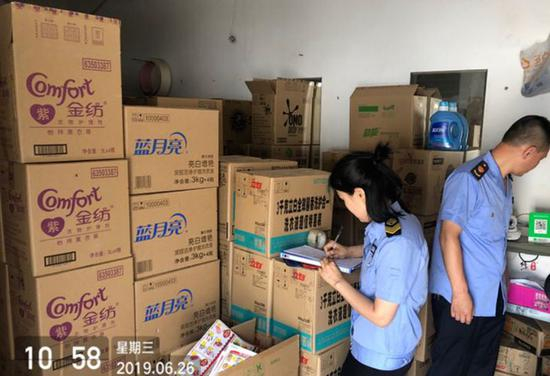
The Story of the Blue Bottle and the Pink Ribbon
Let’s set the scene. Imagine a well-established foreign-invested company operating in China—let’s call them “Blue Company.” They manufacture laundry detergent, not just any detergent, but a premium brand launched in 2010, available nationwide. Their packaging is highly distinctive: a uniquely shaped blue bottle adorned with a specific pink ribbon design on the label. Having invested millions in marketing, this particular packaging has become strongly associated with their brand among Chinese consumers. Legally speaking, this packaging and decoration have gained a “certain influence” (有一定影响) in the market.
One day, Blue Company discovered a product on Pinduoduo, one of China’s largest e-commerce platforms, called “Duoduxin” laundry detergent. Remarkably, the Duoduxin bottle was nearly an exact copy of Blue Company’s bottle—the shape, blue color, pink ribbon on the front label, and even the text layout on the back label were virtually identical. The only notable difference was the name “Duoduxin” printed on the bottle.
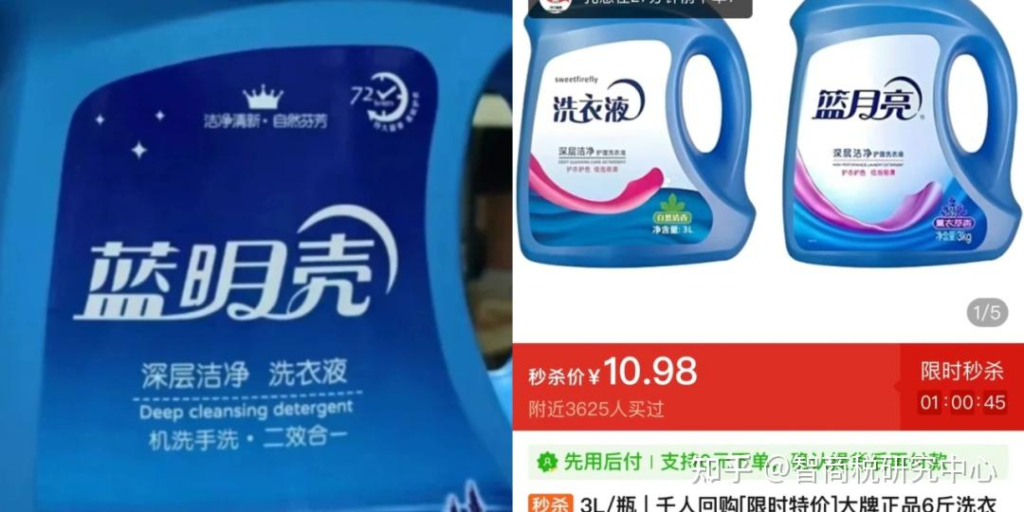
Naturally, Blue Company initiated legal action. But they didn’t stop at suing the seller. They investigated the supply chain and found that the seller, a Beijing-based company, had purchased the packaging, trademark authorization, and barcodes from a Tianjin-based technology company. That technology company had, in turn, acquired the trademark rights from a Tianjin daily necessities store. Blue Company filed lawsuits against all parties involved: the Beijing seller, the Tianjin tech company, the Tianjin store, and the individual sole shareholders of the corporate defendants.
Here’s where the legal complexity arises. The Beijing company argued, “We only bought the bottles from the Tianjin tech company and filled them with our own detergent. We didn’t produce the packaging!” The Tianjin tech company responded, “We merely sold production equipment and provided a contact for the packaging supplier. We did not manufacture or sell counterfeit products!” Meanwhile, the Tianjin daily necessities store claimed, “We only own the trademark and granted the tech company sublicensing rights. We no longer operate the store.”
This is a classic example of the “passing the buck” defense often seen in Chinese intellectual property litigation, where each party portrays themselves as a minor, innocent participant. However, the courts in Beijing saw through these claims clearly.
Grasping Trade Dress Protection in China
Before examining how the court invalidated these defenses, it’s important to understand the legal basis. In China, trade dress protection—referred to legally as the “packaging and decoration” (包装、装潢) of a product—is governed by the Anti-Unfair Competition Law (AUCL).
Unlike trademark law, which safeguards registered words or logos, the AUCL protects the overall visual appearance of a product’s packaging. For a foreign company to succeed, it must establish three criteria. First, the packaging must have a distinctive design that sets it apart from other products; a generic square bottle won’t suffice, as the design must have unique characteristics. Second, the packaging must have gained a “certain influence” in the market, meaning there must be proof of significant sales, advertising efforts, and consumer recognition. Simply creating an attractive bottle isn’t enough without demonstrating that consumers are familiar with it. Third, the defendant’s packaging must closely resemble yours, causing a likelihood of confusion.
In the laundry detergent case, the court observed that Blue Company’s bottle shape, color scheme, and pink ribbon design were highly distinctive. Given their substantial market presence, the court readily determined that this packaging design had “certain influence.”
When comparing the two products, the defendants argued a common defense: “Our text differs, and blue is a typical color for detergents!” The court dismissed this “divide and conquer” tactic. Chinese courts focus on the overall visual impact of trade dress, assessing the product as a whole rather than isolated parts. If the overall impression leads to confusion—if a consumer might mistake Duoduxin for Blue Company’s product—then infringement has occurred. The court found the similarity overwhelmingly strong, ruling the Beijing company guilty of direct unfair competition.
The “I Only Supplied the Box” Defense and Contributory Infringement
Next, we address a critical issue for foreign companies: the responsibility of facilitators. The Tianjin tech company and the daily necessities store did not fill the bottles or list the detergent on Pinduoduo. They merely provided the tools—the trademark, barcode, and packaging. Should they be held liable?
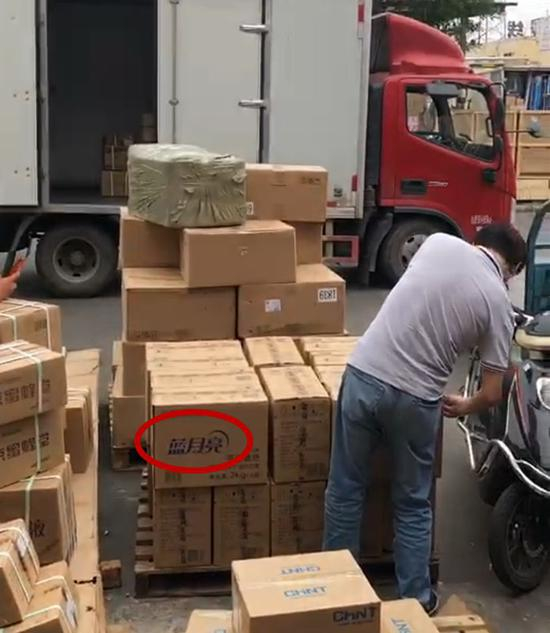
In many legal systems, this relates to contributory infringement. In China, it is called “helping infringement” (帮助侵权). The Civil Code states that anyone who assists or instructs another to commit a tort is jointly and severally liable with the wrongdoer.
The Beijing court determined that the Tianjin tech company and the daily necessities store were indeed assisting infringers. The reasoning: if you supply the trademark, barcode, and packaging for a product that turns out to be counterfeit and infringes on trade dress, your contribution is a significant and substantive aid to the direct infringer.
The tech company could not evade liability by claiming they only provided a phone number for the packaging supplier. The court considered the broader context: the tech company sold laundry detergent production equipment online and explicitly advertised “Free trademark authorization! Free barcodes! Long-term packaging supply!” Essentially, they were offering a “counterfeiting starter kit.” By supplying the trademark, barcode, and packaging templates, they enabled the Beijing company to produce counterfeit goods. They knew or should have known their assistance would facilitate infringement.
Similarly, the daily necessities store, owner of the “Duoduxin” trademark, authorized the tech company to sublicense it. Although they claimed to have ceased operations, they allowed their trademark and barcode to be used on infringing products. The court ruled that they too were aiding infringers.
This ruling is a significant win for brand owners. It means they are not limited to pursuing small-scale sellers who may be shell companies without assets. Instead, they can trace the supply chain and hold facilitators accountable. Providers of the “counterfeiting starter kit” bear joint and several liability alongside the direct infringer.
Piercing the Corporate Veil: Holding the Owner Responsible
In China, many small companies involved in counterfeiting are set up as single-member limited liability companies (一人有限责任公司). This structure is popular because it limits the owner’s liability, meaning that if the company goes bankrupt, the owner’s personal assets are generally protected.
However, there is a catch. According to Chinese company law, if a single-member company cannot prove that its corporate assets are separate from the personal assets of its sole shareholder, the shareholder must bear joint and several liability for the company’s debts.
In our case, both the Beijing company and the Tianjin tech company were single-member LLCs. The individual owners—let’s call them Mr. Liu and Ms. Tian—failed to provide financial records showing that company funds were not mixed with their personal finances. As a result, the court pierced the corporate veil. Mr. Liu was held personally responsible for the Beijing company’s debts, and Ms. Tian was held personally liable for the tech company’s debts.
This is a powerful tool in intellectual property enforcement. Counterfeiters often hide assets in personal accounts. By holding sole shareholders accountable, we ensure that those responsible face the financial consequences of their actions.
Understanding Damages in China
Now, let’s discuss money. Foreign companies often have unrealistic expectations about IP damages in China, either expecting huge awards like in the U.S. or fearing complete disappointment. The truth usually lies somewhere in between—and is improving.
In the laundry detergent case, the court awarded Blue Company 30,000 RMB (about $4,200 USD) in economic damages and 6,000 RMB (around $850 USD) for reasonable legal costs. You might think, “Is that all? After all that effort?”
It’s true that statutory damages in China for typical unfair competition cases can seem low compared to Western standards. But it’s important to understand how damages are calculated here. If you cannot provide solid evidence of your actual losses or the infringer’s profits—which is notoriously difficult in trade dress cases—the court uses its discretion based on factors like the brand’s reputation, the nature and duration of the infringement, and the infringers’ intent.
While 30,000 RMB may seem modest, consider what was achieved: the court ordered an immediate stop to the infringement; counterfeit products were removed from the market; the entire supply chain—from seller to packaging provider to trademark owner—was held jointly liable; and the personal assets of those behind the shell companies were exposed. The real value of this lawsuit was not the monetary award but disrupting the counterfeiting network and setting a legal precedent to protect Blue Company’s market share.
Furthermore, China has been steadily increasing IP damages in recent years, especially in cases involving malicious infringement or punitive damages. The key is building a strong case and presenting evidence effectively to maximize the award.
Why You Need a Specialized Legal Team
If you are a foreign company facing trade dress imitation in China, you might wonder whether to handle it internally or hire a general lawyer. Navigating China’s IP landscape requires specialized expertise.
First, identifying the right defendants is an art. As seen in the laundry detergent case, the direct seller is often just the surface. Suing only the Pinduoduo seller might lead them to shut down, change names, and reopen under a different shell company, achieving nothing. Our team knows how to investigate the supply chain, uncover enablers, and bring trademark providers, barcode suppliers, and packaging companies to court. We apply the “helping infringement” doctrine to hold all parties financially responsible.
Second, we understand the nuances of evidence. To prove “certain influence,” you can’t just present a marketing brochure. You need a strategic collection of sales data, advertising expenses, market surveys, and media coverage, all properly notarized and translated. Chinese courts have strict evidence standards, and a poorly prepared case will be dismissed before the merits are even considered. We know exactly what judges want and how to present your brand’s story effectively within China’s legal framework.
Third, piercing the corporate veil requires precision. It’s not enough to claim a company is a shell. You must compel the sole shareholder to prove their assets are separate, and if they fail, aggressively pursue their personal assets. Our litigation team has deep experience in corporate structures and asset tracing. We know how to expose fund commingling and hold individuals behind counterfeits personally liable.
Finally, China’s legal environment is constantly evolving. Courts are becoming more sophisticated, and new judicial interpretations are regularly issued. What worked five years ago may not work today. We live and breathe Chinese IP law. We track every major case, regulation, and shift in judicial attitude.
A Call to Action: Protect Your Brand Before It’s Too Late
The story of the blue laundry detergent bottle is not unique. It’s a daily reality for foreign brands in China. Your success makes you a target. As soon as your product gains traction, copycats appear, armed with “counterfeiting starter kits” and a network of enablers ready to siphon off your market share.
If you face trade dress imitation, trademark infringement, or other IP issues in China, don’t wait. Don’t hope the problem will resolve itself or settle for half-measures. Contact us. Let us review your case, map the counterfeiting network, and develop a comprehensive legal strategy to protect your brand.
We will trace packaging to its source. We will track down trademark authorizers. We will pierce corporate veils and hold individuals accountable. We will navigate the complexities of the Anti-Unfair Competition Law and the Civil Code to defend your brand with rigor and determination. Your brand is your most valuable asset. In China, protecting it requires more than just filing a lawsuit; it demands a strategic, aggressive, and deeply informed approach. We are here to provide that.