Introduction: The Emerging Landscape of AI Voice Rights Protection
The swift progress of artificial intelligence has dramatically changed the ways we create, share, and consume digital content. One of the most revolutionary developments is AI voice synthesis technology, which allows for the creation of highly realistic, human-like voices from text input. While this technology holds vast commercial opportunities across sectors such as entertainment and customer service, it also brings complex legal challenges concerning the protection of personality rights—especially those related to the human voice. China has become a global frontrunner in both AI innovation and regulation. A recent landmark decision by the Beijing Internet Court in China’s first case involving infringement of AI-generated voice rights (Case No. (2023) Jing 0491 Min Chu No. 12142) marks a pivotal moment in defining the legal limits of AI voice technology. This ruling offers vital insights into how Chinese courts interpret the intersection of AI and personality rights, setting important precedents that will influence regulatory frameworks for years ahead.
For overseas tech companies operating in or entering the Chinese market, understanding this ruling and its consequences is not just advisable but essential for ensuring legal compliance and reducing potential risks. This thorough analysis reviews the court’s decision, outlines the evolving legal environment governing AI-generated voices in China, and offers strategic advice for foreign businesses navigating this complex regulatory landscape.
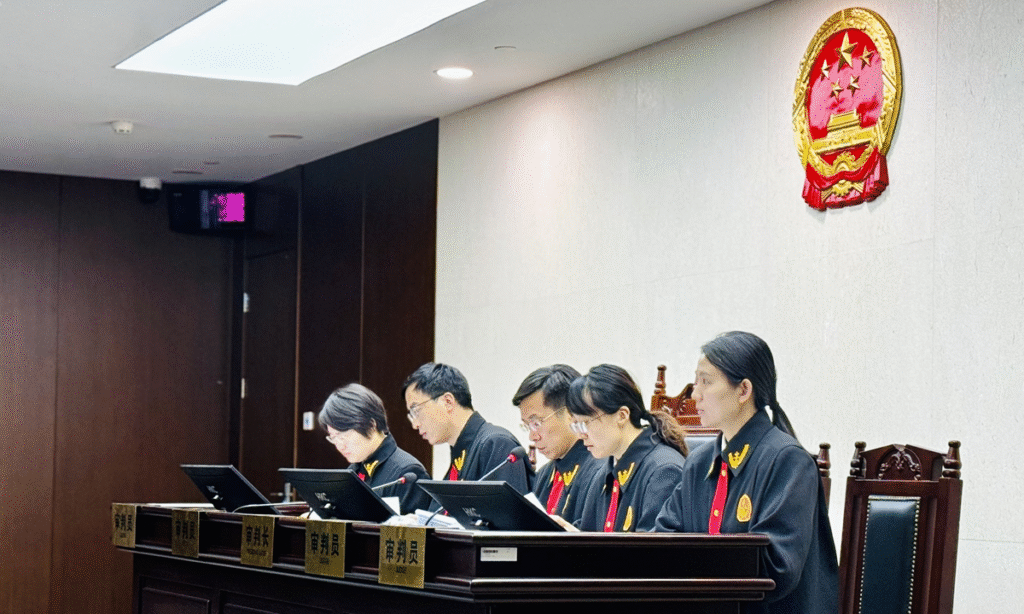
The Case: An In-Depth Review
2.1. Case Background and Facts
The precedent-setting case involved Ms. Yin, a professional voice actor who found that her unique vocal traits had been digitally copied and distributed across numerous Chinese apps without her permission. The investigation uncovered a complicated chain of technology transfer and commercial use that exemplifies the modern AI voice ecosystem.
Ms. Yin had previously worked with Defendant 2, a Beijing media company, to produce voice recordings under a limited commercial agreement. However, this agreement did not cover the creation of AI-generated versions of her voice. Despite this, Defendant 2 later transferred these recordings to Defendant 3, a software developer, granting broad rights for commercial use and data modification in AI product development. Defendant 3 used these recordings as training data to create an advanced text-to-speech (TTS) product capable of generating new audio content in Ms. Yin’s voice. This AI voice technology was then commercialized through Defendant 4’s cloud services platform and integrated into Defendant 1’s intelligent technology platform via an API, allowing widespread public access to generate content using the AI-replicated voice of Ms. Yin.
2.2. Judicial Reasoning and Verdict
The Beijing Internet Court issued a groundbreaking ruling affirming that personality rights extend to AI-generated voices. The court reasoning was based on the principle that when an AI-generated voice retains enough identifiable features of the original person’s natural voice, the synthetic voice remains protected under personality rights laws. The court carefully examined the technical aspects of voice synthesis, acknowledging that although AI introduces artificial elements, the core identifiable features of the original voice persist when sufficient training data is used. This conclusion was supported by detailed analyses of acoustic properties, listener perception studies, and the overall similarity between the natural and AI-generated voices.
As a result, the court ordered Defendants 1 and 3 to publicly apologize to Ms. Yin for infringing her personality rights. Additionally, Defendants 2 and 3 were held jointly responsible for compensatory damages amounting to RMB 250,000, reflecting both the economic value of Ms. Yin’s voice rights and the moral harm caused by unauthorized commercial use.
2.3. Key Legal Issues Addressed
This landmark ruling tackled three major legal questions with significant implications for the AI voice industry:
- First, the court clarified that personality rights in a natural voice also apply to AI-generated versions when the synthetic voice can be identified as originating from the source individual. This sets an important precedent that AI processing does not automatically nullify underlying personality rights.
- Second, the court addressed the scope of authorization needed for using voice data in AI training, emphasizing that explicit consent must be obtained for each specific use, especially when the use goes beyond the original purpose of data collection.
- Third, the ruling established a framework for assigning liability among multiple parties in the AI voice supply chain, recognizing that different participants bear varying degrees of responsibility based on their knowledge, control, and commercial benefit from the infringement.
The Legal Framework for Protecting Voice Rights in China
3.1. Constitutional and Legislative Foundations
China legal system offers strong protection for personality rights through various legislative measures. The Civil Code of the People’s Republic of China, effective since 2021, provides the most comprehensive legal basis for safeguarding personality rights. Article 1023 specifically addresses voice rights, stipulating that the provisions related to portrait rights should be applied by analogy to voice rights. This legal approach acknowledges voice as a vital part of an individual’s identity and dignity. The law clearly states that voice rights belong exclusively to natural persons and cannot be transferred or limited through contracts. This non-transferability underscores the intrinsic link between voice and personal identity, setting voice rights apart from traditional intellectual property rights.
3.2. The Notion of Identifiability in the Context of AI-Generated Voices
The court decision introduces and expands on the idea of identifiability as the key criterion for determining whether personality rights apply to AI-generated voices. This evaluation involves a comprehensive analysis that takes into account both objective technical features and subjective human perception.
From an objective standpoint, the court examines acoustic elements such as fundamental frequency, formant patterns, timing, and other unique vocal traits that are consistent in both natural and AI-generated voices. Advanced audio analysis methods can measure these similarities to assess whether the synthetic voice sufficiently preserves the distinctive characteristics of the original voice.
On the subjective side, the court considers whether average listeners can recognize the AI-generated voice as that of a particular individual. This may involve expert opinions, listener surveys, and comparative voice sample analyses. The court acknowledges that identifiability is not a simple yes-or-no matter but exists on a continuum, requiring a careful case-by-case evaluation.
3.3. Standards for Infringement and Liability Evaluation
The legal criteria for determining infringement of voice rights in the AI context combine traditional tort law principles with specific considerations related to AI-generated content. The Beijing Internet Court ruled that infringement occurs when protected voice features are used without authorization, especially if such use leads to public distribution or commercial gain.
The court highlighted that assessing liability involves multiple factors, including the nature and extent of the unauthorized use, the commercial profits obtained from the infringement, the technical complexity of the AI processing involved, and the actual damage suffered by the rights holder. Notably, the court recognized that violations of personality rights can result in both economic and non-economic damages, reflecting the dual commercial and moral dimensions of voice rights.
Strategic Considerations for International Technology Firms
4.1. Establishing a Comprehensive Compliance Framework
International companies operating in China’s AI voice industry need to create and enforce thorough compliance frameworks tailored to the specific challenges of AI-generated content. These frameworks should include strict data governance policies, technical protections, and contractual arrangements to ensure adherence to changing legal standards.
A key element of effective compliance is building strong systems for data collection and management. Companies must adopt rigorous procedures to obtain and document informed consent for the use of voice data, making sure consent forms clearly outline all possible uses, such as AI training and commercial purposes. These consent processes should be transparent, detailed, and revocable, giving individuals meaningful control over how their voice data is utilized.
Technical protections are equally vital. Although courts have noted that technical measures like digital watermarking do not automatically exempt companies from liability for infringement, these tools remain important parts of a comprehensive compliance approach. Firms should deploy multiple layers of technical safeguards, including content identification systems and usage monitoring, to detect and prevent unauthorized use.
4.2. Managing Risks Across the Supply Chain
The Beijing Internet Court’s decision clarifies that liability can arise at various points within the AI voice supply chain, requiring companies to adopt sophisticated risk management strategies based on their role in the ecosystem. Different participants have varying degrees of responsibility depending on their knowledge, control, and commercial benefit from using voice data.
- Upstream data providers and technology developers carry the highest responsibility for compliance, as they oversee the initial collection and processing of voice data. These entities must conduct thorough due diligence to confirm the authenticity and scope of consent for all voice data used in AI training. This involves keeping detailed records of data origins, maintaining audit trails for data processing, and establishing clear contracts with data contributors.
- Midstream distributors and platform operators face distinct compliance challenges, often having limited insight into the original data collection. However, they cannot rely solely on contractual assurances from their technology providers. Instead, they need to implement reasonable verification procedures and be ready to respond quickly to infringement claims. This includes setting up clear processes for content removal, user verification, and cooperation with rights holders.
- Downstream users and enterprise clients should develop internal policies governing the appropriate use of AI voice technologies, especially in commercial contexts. They should provide training for employees using AI voice tools, establish clear guidelines that respect personality rights, and keep records of their compliance activities.
4.3. Regulatory Surveillance and Flexible Compliance
China regulatory environment for AI technologies is rapidly evolving, with new rules and guidelines emerging to address new challenges. International companies must set up robust systems to monitor regulatory changes and adjust their compliance strategies accordingly. The Cyberspace Administration of China (CAC) has been particularly proactive in creating AI governance frameworks, including upcoming “Measures for the Identification of AI-Generated Synthetic Content.” These regulations will require transparency and labeling of AI-generated outputs, compelling companies to implement technical solutions that clearly disclose synthetic content to users.
Companies should also keep track of developments within industry associations, as Chinese technology groups often issue self-regulatory guidelines that complement official government rules. Engaging in these industry initiatives can offer valuable insights into regulatory trends and best practices.