Trademark
Effective Approaches to Address Absolute Grounds for Trademark Refusal in China
In the past three years obtaining trademark registration in China has become increasingly challenging. Notably, the absolute grounds for refusal stipulated in Article 10, Paragraph 1, Items 7 and 8 of China Trademark Law have emerged as significant hurdles in securing trademark rights. High Upholding Rate of Refusals on Review Article 10, Paragraph 1, Item […]

The Dilemma of Certification Marks in China: A Critical Analysis of Distinctiveness and Systemic Risk
Introduction: Navigating the Challenges of Current Practice Within the intricate framework of Chinese intellectual property law, certification marks stand out as one of the most theoretically debated and practically uncertain areas. I am currently representing a leading organic certification organization in a case that highlights the significant ambiguities affecting this field. My client, a specialized […]

False Alarm or Mere Preparation? An In-Depth Analysis of the 2025 Proposed Changes to China’s Trademark Law and Practical Effects
In the ever-changing landscape of Chinese Intellectual Property law, the only constant is change. Among the numerous updates, the recent amendment to the Trademark Law has sparked significant debate, expectation, and ultimately, reassurance. For international businesses and foreign legal firms keeping a close eye on China, understanding these changes is more than just a matter […]

A Tactical Guide to Fighting Against Copycats on Chinese E-commerce
Last week just before the Christmas holidays a Norwegian SME client has discovered counterfeit replicas of their products being sold on Chinese websites. Given that the client is seeking a prompt, effective, and cost-efficient solution rather than incurring high legal fees, how can we best address and resolve this e-commerce infringement issue? I. Protective Stronghold […]

Deconstructing the Boundaries of Trademark Exhaustion in the Era of Up-cycled Luxury
In the luxury industry, the global growth of the circular economy and sustainable fashion presents a challenging dilemma. On one side, it supports corporate social responsibility objectives and appeals to a new generation of eco-conscious consumers. On the other side, it raises complex issues of potential intellectual property violations, where the boundary between legitimate reuse […]

Navigating the New Paradigm of Trademark Management in China
In recent years, Chinese trademark law has undergone a notable shift, with greater focus placed on the genuine use of trademarks. As a result, there has been a marked increase in cases where defensively registered trademarks have been cancelled due to lack of authentic commercial use. Registering and maintaining a trademark requires considerable time and […]

A Guide to Registering Trademarks with Foreign Country Names in China (Judgement Attached)
When assisting international companies entering the Chinese market, one of the most common and challenging issues we face involves registering trademarks that include or reference foreign country names. At first glance, the legal framework seems contradictory. Public campaigns and general knowledge of intellectual property law have taught many that a trademark identical or similar to […]

Tactical Trademark Guardianship: Safeguarding Your Brands from Che San Challenges in China
Following the discussion on essential trademark compliance—such as strict adherence to registered mark formats, statutory deadlines, and approved classification limits—this advisory focuses on the complex issue of maintaining defensive trademark registrations against Article 49 cancellations (Che San) under China Trademark Law. Although these registrations are not actively used in commerce, they play a vital strategic […]
China New Guidelines on E-commerce Platforms and Trademark Infringement: Key Insights for International Businesses
Overview To tackle the increasing problem of trademark violations in China rapidly expanding e-commerce industry, the State Administration for Market Regulation (SAMR) has introduced draft regulations titled Regulations on E-commerce Platforms’ Assistance in Investigating and Handling Trademark Infringement Cases (Draft Regulations). This initiative supports China wider intellectual property (IP) protection goals outlined in the Outline […]

China Changing Trademark Non-Use Cancellation System:An In-Depth Review for Overseas Stakeholders
Introduction: Fundamental Principle and Recent Changes China trademark system, like many worldwide, is based on the principle that trademarks must be actively used. A trademark is not just a registration certificate but a commercial asset that identifies the source of goods or services. To uphold this, Article 49(2) of China Trademark Law allows anyone—individuals or […]

Navigating the Intricacies of Damages in Chinese IP Battles: An In-Depth Dive into Street Basketball Trademark Case
Over the last ten years, China legal framework has made remarkable progress by enhancing IP protections, establishing specialized courts, and raising statutory damage limits. The government stance is clear: IP is a valuable asset, and violations will face penalties. Nonetheless, there often remains a considerable gap between the legal entitlement to prevent others from using […]
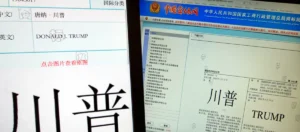
Why Registering a Trademark in China Has Become Increasingly Challenging: A Key Guide for Foreign Brands
China offers unmatched business opportunities for overseas businesses. However, before selling products or promoting services, they must face a critical and growing obstacle: the trademark registration process. Recently, the rejection rate for trademark applications has surged to record highs. By early 2025, China had about 50 million active registered trademarks, with nearly 20,000 new applications […]

Limiting and Eliminating the “Other Improper Means” Clause in China Trademark Legislation
This article is a translation of a work by Professor Kong Xiangjun. The original text can be found at: https://mp.weixin.qq.com/s?__biz=MzUwOTg0MTkwNA==&mid=2247486267&idx=1&sn=a92bcb198c7723302ecba094fee3ea85&scene=21&poc_token=HAFTBGmjqSmbXCdR7tezsfxsbrG2EbtMGK9BEFJX Key Issues in the Current Use of “Other Unfair Means” In current practice regarding trademark invalidation, the application of “other unfair means” faces several significant challenges: (a) Whether it should be applied alongside Article 4, […]
Navigating Trademark Similarity Challenges in the Chinese Market: A Strategic Guide for Foreign Companies
For international businesses aiming to enter the expansive Chinese market, securing trademark protection is a vital step. However, a common challenge arises when your carefully developed trademark is deemed “similar” to one already registered or pending. This situation is not a dead end but rather a strategic juncture that calls for thoughtful planning and effective […]
Cleansing the Shadows of Bad Faith? Exploring the Rule and Its Exception in Article 44 of the China Trademark Law
Insights from the Hualing HUALING Saga on Trademark Transfers In today’s environment of increasingly strict intellectual property protection in China, trademarks have become more important than ever as key corporate assets. Nevertheless, malicious activities related to trademark registration, such as hoarding and squatting, continue to pose challenges that disrupt market order. Article 44, Paragraph 1 […]
The 2025 George Patton Metaverse Trademark Showdown: What Led a Virtual Car to Rack Up a RMB 1 Million Fine?
On July 21, 2025, the Hangzhou Intermediate Court delivered a second-instance ruling in the trademark infringement and unfair competition dispute concerning the George Patton brand Case No.: (2024) Zhe 01 Min Zhong 10520. This landmark case, recognized as the first involving metaverse virtual reality trademarks, has garnered widespread attention. The court not only upheld the […]
Rising Refusal Rates for Trademark Applications in China: Insights into Changing Examination Standards and Strategic Considerations
Understanding CNIPA Stricter Trademark Examination Policies and Their Impact on Brands From 2024, the China National Intellectual Property Administration (CNIPA), which oversees the Trademark Office (TMO) and the Trademark Review and Adjudication Board (TRAB), introduced significantly stricter examination criteria for new trademark applications. This policy change has led to a notable increase in refusals based […]
Triumph in Court: How Trademark Prior Use Won the Day in a Landmark Infringement Battle
Case Notes: A Landmark Victory in Prior Use Trademark Defense In the summer of 2024, an urgent matter interrupted my routine work. Zhejiang MEEC Company, a reputable enterprise with nearly 20 years in the electroplating industry, faced a significant trademark infringement lawsuit. A Beijing-based company, holding the registered MEEC trademark, claimed damages of US$10Million, threatening […]
Chinese brands broadening horizons through international purchases
In recent years, an increasing number of Chinese brands have confidently entered the international market by acquiring well-known foreign brands. Today, renowned names such as Arc’teryx, G-III, Paladin, Bogner, and THG—previously celebrated worldwide—are now proudly included in the portfolios of Chinese companies. These brands have been integrated into a strategic framework developed by Chinese enterprises, […]
Trademark Battles Among Business Partners: Who Truly Owns trademark Rights to Barizam?
The Supreme Court delivered a final decision regarding the trademark ownership and infringement dispute between Heilongjiang Chuanfeng Co and Russia Balizam concerning the Barizam trademarks. The Court overturned the previous rulings from the lower courts, affirming that the Barizam series trademarks registered in China rightfully belong to Russia Barizamm Company, and has ordered the transfer […]