


Non-Use Cancellation China
Andrea_liang

Tactical Trademark Guardianship: Safeguarding Your Brands from Che San Challenges in China

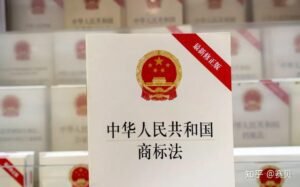
Following the discussion on essential trademark compliance—such as strict adherence to registered mark formats, statutory deadlines, and approved classification limits—this advisory focuses on the complex issue of maintaining defensive trademark registrations against Article 49 cancellations (Che San) under China Trademark Law. Although these registrations are not actively used in commerce, they play a vital strategic role in preventing brand dilution, deterring unauthorized use, and securing opportunities for future market growth. China Changing Trademark Non-Use Cancellation System:An In-Depth Review for Overseas Stakeholders Defending Trademark Non-use Cancellation The Legal Challenge and Our Solution China Che San provision requires cancellation of trademarks that have not been used for three consecutive years, aiming to remove inactive marks from the register. However, defensive registrations are typically not intended for traditional commercial use, which creates a conflict with the law use requirements. Conventional advice to fully commercialize these marks often proves impractical. After thorough review of

Read More »
Andrea_liang

Navigating Celebrity Portrait Rights in China

A recent inquiry from a client at a leading film production company highlighted a critical issue: How can the unique persona of a star character be protected within the film itself? This question moves beyond the simple use of a heads hot, touching upon the very essence of how a celebrity commercial value is created and monetized. While public figures naturally attract considerable attention, their right to control the use of their likeness—referred to as portrait rights—is firmly protected under Chinese law. This legal framework carefully balances individual rights with the public interest, and missteps in this area can lead to significant legal and financial consequences. Legal Framework: Protections and Boundaries China Civil Code provides the foundation for portrait rights protection. It defines a portrait as any recognizable external image of a specific individual, whether captured through photography, sculpture, painting, or other media. The critical legal test is identifiable—if the

Read More »
Andrea_liang

When the Shield Breaks: The New Age of Internet Liability

In recent years I have witnessed a significant and crucial transformation in the digital world. Core internet services—such as CDN acceleration, DNS resolution, and development frameworks—have traditionally operated under the principle of technical neutrality. This principle has long protected these infrastructure providers from being held directly responsible for the content they help deliver. They were seen as the digital equivalent of road builders, not accountable for the goods transported on their roads. However, this period of unquestioned protection is coming to an end. The digital environment has evolved into a complex, borderless network where illegal activities, especially large-scale copyright infringement, can thrive with increasing sophistication. The idea of technical neutrality is no longer an absolute defense but a nuanced argument that courts around the world are scrutinizing more closely. A landmark decision in November 2025 by the Tokyo District Court against Cloudflare—a company managing about 20% of global internet traffic—illustrates

Read More »
Andrea_liang

China New Guidelines on E-commerce Platforms and Trademark Infringement: Key Insights for International Businesses

Overview To tackle the increasing problem of trademark violations in China rapidly expanding e-commerce industry, the State Administration for Market Regulation (SAMR) has introduced draft regulations titled Regulations on E-commerce Platforms’ Assistance in Investigating and Handling Trademark Infringement Cases (Draft Regulations). This initiative supports China wider intellectual property (IP) protection goals outlined in the Outline of the National Intellectual Property Strategy (2021–2035) and directives from the Communist Party of China and State Council on strengthening IP enforcement. The Draft Regulations focus on closing enforcement loopholes, especially concerning ghost online stores — sellers using fake or untraceable information — which have complicated IP protection efforts. For foreign companies operating in or exporting to China, understanding these proposed rules is crucial for protecting trademark rights and navigating the changing regulatory environment. This article analyzes the background, main provisions, and practical effects of the Draft Regulations for international businesses. Background: The Need to

Read More »
Andrea_liang

The Sub-Licensing Challenge in China: An Important Case Study Highlighting Risks in Foreign Brand Licensing

A recent decision by the Shanghai Intellectual Property Court offers a vital lesson for international brand owners and their Chinese partners. The court overturned a lower court ruling in a trademark licensing dispute (referred to here as the Brand A Case), dismissing the plaintiff claims entirely. This case, centered on a sub-licensing arrangement involving a foreign brand in China, exposes common legal pitfalls and provides valuable insights on structuring such agreements to minimize risk. As counsel for the successful party on appeal, I will review the key issues and share practical strategies for risk prevention. I. Overview of the Case In October 2018, the Operator (Party A) engaged an Intermediary (Party C) to facilitate a cooperation agreement with the owner of Brand A and authorized the Intermediary to handle payments on its behalf. In November 2018, the Master Licensee (Party B) entered into a License Agreement with the foreign Brand

Read More »
AI Intellectual Property
Andrea_liang

China’s First Case Involving AI-Generated Voice Infringement

Introduction: The Emerging Landscape of AI Voice Rights Protection The swift progress of artificial intelligence has dramatically changed the ways we create, share, and consume digital content. One of the most revolutionary developments is AI voice synthesis technology, which allows for the creation of highly realistic, human-like voices from text input. While this technology holds vast commercial opportunities across sectors such as entertainment and customer service, it also brings complex legal challenges concerning the protection of personality rights—especially those related to the human voice. China has become a global frontrunner in both AI innovation and regulation. A recent landmark decision by the Beijing Internet Court in China’s first case involving infringement of AI-generated voice rights (Case No. (2023) Jing 0491 Min Chu No. 12142) marks a pivotal moment in defining the legal limits of AI voice technology. This ruling offers vital insights into how Chinese courts interpret the intersection of

Read More »
Non-Use Cancellation China
Andrea_liang

China Changing Trademark Non-Use Cancellation System:An In-Depth Review for Overseas Stakeholders

Introduction: Fundamental Principle and Recent Changes China trademark system, like many worldwide, is based on the principle that trademarks must be actively used. A trademark is not just a registration certificate but a commercial asset that identifies the source of goods or services. To uphold this, Article 49(2) of China Trademark Law allows anyone—individuals or organizations—to request cancellation of a registered trademark if it has not been used for three consecutive years without valid reason. This three-year non-use cancellation (known as 撤三) was designed to clear inactive trademarks from the register and empower the public, including competitors and concerned citizens, to prevent misuse such as hoarding or squatting. However, since 2025, the China National Intellectual Property Administration (CNIPA) has introduced stricter evidence requirements during the review process to curb abusive 撤三 filings. While aiming to prevent misuse, these new rules have unintentionally narrowed the range of eligible applicants, making the

Read More »
Andrea_liang

Navigating the Intricacies of Damages in Chinese IP Battles: An In-Depth Dive into Street Basketball Trademark Case

Over the last ten years, China legal framework has made remarkable progress by enhancing IP protections, establishing specialized courts, and raising statutory damage limits. The government stance is clear: IP is a valuable asset, and violations will face penalties. Nonetheless, there often remains a considerable gap between the legal entitlement to prevent others from using your IP and the practical ability to secure financial compensation that accurately reflects the infringement value. Calculating damages is the most complicated and frequently contested part of IP enforcement in China. Even a ruling in favor of infringement can feel hollow if the awarded damages are minimal. This article seeks to clarify the process of determining damages in China through an in-depth, firsthand examination of a recent, illustrative case: JOYCITY Corporation v. Chengdu Lemondo Technology Co., Ltd. and Giant Network Group entities (Case No. (2024) Hu 73 Min Zhong No. 436). Acting as counsel for

Read More »
Andrea_liang

Why Registering a Trademark in China Has Become Increasingly Challenging: A Key Guide for Foreign Brands

China offers unmatched business opportunities for overseas businesses. However, before selling products or promoting services, they must face a critical and growing obstacle: the trademark registration process. Recently, the rejection rate for trademark applications has surged to record highs. By early 2025, China had about 50 million active registered trademarks, with nearly 20,000 new applications submitted daily. The numbers are telling. In 2024, China National Intellectual Property Administration (CNIPA) examined over 6.6 million applications, but the initial approval rate dropped to just under 54%, meaning nearly half of all applications were rejected. This raises an important question for foreign brands: why has obtaining a trademark in China become so difficult? Is it simply due to a lack of originality, or are there deeper, more influential factors? Understanding this reality is essential for developing a successful market entry plan. The Scale Challenge: Operating in a Saturated Market China trademark environment resembles

Read More »
China Trademark Infringement Damages
Andrea_liang

Limiting and Eliminating the “Other Improper Means” Clause in China Trademark Legislation

This article is a translation of a work by Professor Kong Xiangjun. The original text can be found at: https://mp.weixin.qq.com/s?__biz=MzUwOTg0MTkwNA==&mid=2247486267&idx=1&sn=a92bcb198c7723302ecba094fee3ea85&scene=21&poc_token=HAFTBGmjqSmbXCdR7tezsfxsbrG2EbtMGK9BEFJX Key Issues in the Current Use of “Other Unfair Means” In current practice regarding trademark invalidation, the application of “other unfair means” faces several significant challenges: (a) Whether it should be applied alongside Article 4, Paragraph 1. During the enforcement of the Trademark Law in 2001 and 2013, “other unfair means” primarily targeted trademarks registered without genuine intent to use. This led to the inclusion of a prohibition in Article 4, Paragraph 1 in the 2019 revision, raising questions about whether the former has been superseded by the latter and whether its scope has effectively disappeared. (b) Whether trademark registrations based on association (parasitic trademarks) fall under “other unfair means.” Both the 2021 Trademark Examination and Trial Standards by the National Intellectual Property Administration and the 2019 Trial Guidelines for

Read More »

Subscribed

Recent Posts
Newsletter Signup Form
Hello, and thank you for your interest. Please be advised that this website is independently operated and managed by me personally, and all content is authored by myself. Due to the constraints of a one-person operation, my responses to subscription messages may occasionally be delayed. I appreciate your understanding. If you are interested in the content on this site, I encourage you to contact me directly via email wenwen82cn@vip.163.com. I will ensure that you receive the latest articles directly to your inbox as soon as they are published.