


Andrea_liang

Legal Insight: No Exit for the Defiant — How China Enforces Judgments Against Foreign Nationals

Over the past year, I have handled several civil and criminal cases involving exit restrictions imposed on foreign nationals. Many expatriates remain unfamiliar with these enforcement measures. Drawing on the cases I have personally managed—appropriately anonymized—I will provide an introduction to this subject. Executive Summary In the realm of international business, a common and risky misconception persists among foreign investors and expatriates dealing businesses with Chinese companies: that holding foreign nationality offers protection from Chinese law. Many believe, mistakenly, that in cases of commercial disputes or debt issues, one can simply leave the country and avoid settling liabilities, leaving creditors with unenforceable judgments.This belief is not only legally incorrect but also exposes individuals and businesses to significant operational and personal risks. Under current judicial practices in the People’s Republic of China, foreign nationality rarely serves as a valid defense against enforcement actions. The Chinese legal system has strong mechanisms to


Read More »
china labor law
Andrea_liang

The Invisible Boundary: Understanding the Challenges of Working in China as a Foreigner

China economic growth is often highlighted through its infrastructure, trade, and manufacturing strengths. However, beneath major projects like the Belt and Road Initiative and the impressive skylines of major cities, a quieter but significant change is happening. The makeup of China workforce is evolving as foreign professionals become essential contributors—from top executives in Shanghai’s multinational companies to technical staff in the Greater Bay Area. Yet, for many expatriates and multinational HR teams, China labor market presents a unique legal environment where missing a single document can mean losing all labor law protections. For better advising clients on relocating, seconding, or hiring directly in China, grasping the details of Labor Relationship Recognition is crucial for managing risks. China legal system treats foreign employment with strict regulations that can surprise those used to more relaxed Western systems. The key rule is clear: without official administrative approval, no labor relationship exists, and without

Read More »
Andrea_liang

Trapped at Border: A Practical Guide to Handling Exit Bans in China

Introduction: The Hidden Risk in the Chinese Market For foreign executives, China offers vast opportunities but also significant complexities. After years of navigating supply chains, joint ventures, and regulatory requirements, there remains a risk that often surprises even the most experienced professionals: the exit ban, known in Chinese legal terms as biankong. This situation feels more like a suspense novel than a routine business trip. Imagine standing at the immigration desk at Shanghai is Pudong International Airport or Beijing Capital Airport, boarding pass ready to return home. Suddenly, after scanning your passport, the officer hesitates, types something, and the computer signals an alert. You are asked to step aside and then informed you cannot leave China. Usually, this is not due to criminal charges but rather a commercial dispute. This threat is very real. I recently served as legal counsel for a Turkish client representing a foreign manufacturing company who

Read More »
Criminal Enforcement
Andrea_liang

Introducing a New Era of Design Protection in China’s Jewelry Market

From Administrative Actions to Criminal Enforcement: Enhancing Jewelry Protection China’s intellectual property enforcement is undergoing a major shift that redefines artistic protection and reflects a more mature legal system for creative industries. For years, international brands in China struggled to protect their industrial designs, often relying on administrative seizures that only temporarily disrupted counterfeiters, leaving design-focused business models exposed. However, a landmark ruling in late 2025 has fundamentally changed this by setting a strong precedent for protecting jewelry and fashion accessories through criminal copyright law. This landmark case involved the renowned fashion jewelry brand APM MONACO, which successfully pursued criminal copyright charges against a large counterfeiting network in Shanghai. Unlike typical administrative measures, this was the first criminal copyright case in China’s jewelry sector to result in a public sentencing. In November 2025, the Huangpu District Court in Shanghai issued a decisive judgment, sentencing and fining the leaders of an

Read More »
China Trademark Law
Andrea_liang

Effective Approaches to Address Absolute Grounds for Trademark Refusal in China

In the past three years obtaining trademark registration in China has become increasingly challenging. Notably, the absolute grounds for refusal stipulated in Article 10, Paragraph 1, Items 7 and 8 of China Trademark Law have emerged as significant hurdles in securing trademark rights. High Upholding Rate of Refusals on Review Article 10, Paragraph 1, Item 7 prohibits the registration and use of trademarks that are deceptive or likely to mislead the public regarding the quality or origin of goods. Item 8 forbids trademarks that harm socialist moral standards or have other adverse effects. These provisions have broad and evolving scopes and currently serve as key bases for refusals and enforcement actions involving trademarks related to health claims, ethnic sentiments, military terms, and more. Data from China National Intellectual Property Administration (CNIPA) shows a sharp increase in trademark refusals based on absolute grounds since 2022, with deceptiveness becoming a primary focus.

Read More »
AI Intellectual Property
Andrea_liang

AIGC Case Update: AI Writing Tools and Baidu Keyword Settings

Attorney Comments This case sets an important precedent for organizations working in the generative AI space concerning the management of digital marketing assets and the reduction of intellectual property risks. From a legal risk management standpoint, the court’s decision clearly establishes that advertisers cannot rely solely on automated tools provided by third-party platforms—such as keyword planners or automated bid management systems—to fulfill their duty of care. The judiciary has made it clear that the convenience of automation does not exempt businesses from trademark infringement claims. For AI developers and marketing teams, this ruling highlights a significant shift in compliance expectations. It is no longer adequate to depend on platform algorithms to review promotional content; companies must establish thorough internal review processes to identify third-party trademarks before launching broad keyword campaigns. The court’s dismissal of the defendant’s “automated tool” defense indicates that businesses are expected to maintain active awareness of the

Read More »
Trade Secrets
Andrea_liang

A Recent Landmark Ruling on Trade Secrets and Its Impact on Foreign Businesses in China

For many years, intellectual property (IP) protection in China has evolved gradually, often presenting challenges for foreign companies entering the market. These enterprises have had to balance the vast opportunities China offers with concerns about enforcing their IP rights effectively. Recently, however, there has been a significant shift. Chinese courts, especially specialized IP courts and the Supreme People’s Court (SPC), are issuing rulings that not only align with international standards but, in some cases, provide even stronger protections for innovators. A key milestone in this development is the SPC’s recent final judgment in the case between Beijing Jingdiao Technology Group Co., Ltd. (Jingdiao) and a former employee, Mr. Tian, along with a Shenzhen-based company case number (2023) Zui Fa Min Min Zhong No. 2039. The court ordered compensation totaling 381.63 million RMB (approximately 53 million USD). While the amount is remarkable, the ruling’s true importance lies in the court’s reasoning.

Read More »
China Intellectual Property
Andrea_liang

Exploring the Digital Frontier: Legal Guide for International Creators in China’s Emerging New Media Environment

Introduction: The TikTok Refugee Movement and the Emergence of a New Digital Opportunity Recent developments surrounding TikTok in the United States have sparked an unexpected and intriguing shift in digital user demographics. In January 2025, the potential ban of TikTok’s service in the U.S. led to a significant migration of American users seeking alternative platforms. Among these, China’s domestic lifestyle social media app, Xiaohongshu (Little Red Book), stood out as an unexpected haven. Thousands of American users, identifying themselves as TikTok Refugees, embraced the platform, forging a cultural connection that few anticipated. Although TikTok’s service was eventually restored in the U.S., this movement opened a new gateway. For the first time, a considerable number of Western creators experienced the dynamic and interactive nature of China’s digital ecosystem firsthand. For many, what started as a temporary exploration may develop into a sustainable business opportunity. China’s expansive consumer market, coupled with the

Read More »
China Trademark Law
Andrea_liang

The Dilemma of Certification Marks in China: A Critical Analysis of Distinctiveness and Systemic Risk

Introduction: Navigating the Challenges of Current Practice Within the intricate framework of Chinese intellectual property law, certification marks stand out as one of the most theoretically debated and practically uncertain areas. I am currently representing a leading organic certification organization in a case that highlights the significant ambiguities affecting this field. My client, a specialized body that provides organic certification for agricultural products in collaboration with third-party testing institutions, has long used a registered certification mark to demonstrate adherence to stringent organic standards. This mark has been registered in China for many years and serves as a trusted symbol of quality and compliance in the agricultural industry. However, the security of this protection was recently undermined when a competitor filed an invalidation proceeding against the certification mark with the China National Intellectual Property Administration (CNIPA). In a decision that reveals a fundamental misunderstanding, the CNIPA ruled that the certification mark

Read More »
China Trademark Law
Andrea_liang

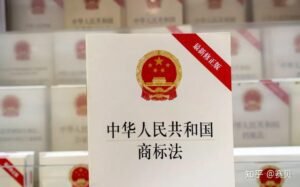
False Alarm or Mere Preparation? An In-Depth Analysis of the 2025 Proposed Changes to China’s Trademark Law and Practical Effects

In the ever-changing landscape of Chinese Intellectual Property law, the only constant is change. Among the numerous updates, the recent amendment to the Trademark Law has sparked significant debate, expectation, and ultimately, reassurance. For international businesses and foreign legal firms keeping a close eye on China, understanding these changes is more than just a matter of compliance—it is a crucial strategic imperative. Introduction: From Major Impact to Subtle Effects Reflecting on 2023, the China National Intellectual Property Administration (CNIPA) released a Draft for Comments suggesting amendments to the Trademark Law, which had a significant impact. The draft proposed major changes, including banning repetitive trademark applications, enforcing strict proof-of-use requirements for trademark owners to keep their registrations, and introducing various other important reforms aimed at cleaning up a registry plagued by bad faith filings. The industry initially welcomed these efforts enthusiastically. However, this enthusiasm was short-lived. The 2023 draft was so

Read More »

Subscribed

Recent Posts
Newsletter Signup Form
Hello, and thank you for your interest. Please be advised that this website is independently operated and managed by me personally, and all content is authored by myself. Due to the constraints of a one-person operation, my responses to subscription messages may occasionally be delayed. I appreciate your understanding. If you are interested in the content on this site, I encourage you to contact me directly via email wenwen82cn@vip.163.com. I will ensure that you receive the latest articles directly to your inbox as soon as they are published.